Geographic Information Systems
Introduction
Geographic Information System comprises hardware, the map management software and data related to different networks. It provides a holistic view of data retrieval and processing. It also uses the technique of data capturing, managing, analyzing and displaying cartographic information referenced using longitudes and latitudes.
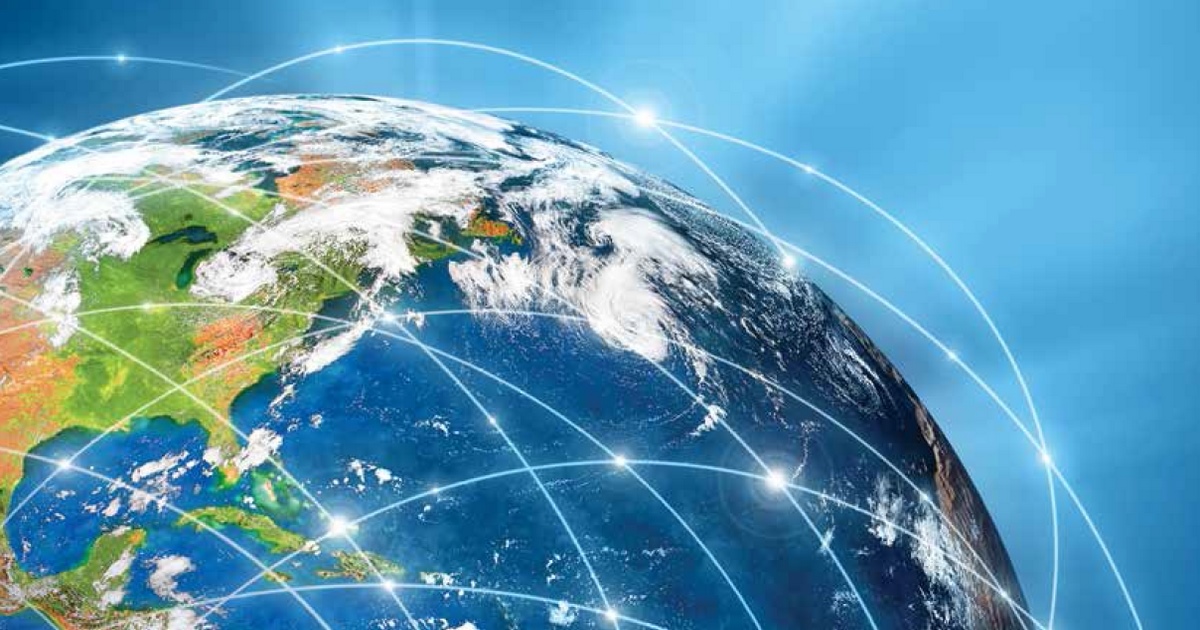
Maps have been used by man from time immemorial for travel. GIS is a computerized cartographic system which gives the user access to geographical data from different views. It is possible to map networks such as railways lines, water supply, drainage, roads etc into different layers using a GIS. This is forms the core of GIS based data retrieval and processing. GIS allows us to view, understand, question, interpret, and visualize data in many ways that reveal relationships, patterns, and trends in the form of maps, globes, reports, and charts. A Geographic Information System invariably has map associated with it. Very often a GIS is mistaken for a mapping program which works on a background database. A GIS is much more than that. For example to access a tourism destination, it is possible to have map interface through the associated web site. This will help the potential traveler zoom on to destination and select the desired the required information, say a hotel. On clicking the appropriate icon he may be taken to the web site of the hotel or a web based booking engine. It is not surprising to find travelers exploring browsing the website for viewing hotel rooms. Thus we can see that a GIS can provide a great deal more problem-solving capabilities than using a simple mapping program or adding data to an online mapping tool.
Vectors and Rasters
GIS has gained important since it is capable of bringing together information from many source simultaneously which enables the user to provide real time solutions. Here data is associated specific locations on the earth's surface. Incorporating positions based on latitude and longitude these locations can be attached to points on the digitized geographic outline. Rasters and vectors are used in a GIS. A raster is basically a digital image such as an aerial photograph of a location, say taken from a satellite. The data is represented as a table consisting of rows and columns. The intersection of a row and column is called a cell, each of which has a single value. This data is then transferred into GIS for use in making maps and other projects. A vector is the most popular way of representing data in GIS. Vectors consist of shapefiles which in turn are composed of points, lines, and polygons. In a GIS, a point is the location of a feature in the terrain or digitized map say a tourist destination. A line is used to show linear features like roads, railway tracks or rivers and a polygon is a two dimensional feature that shows an area on the earth's surface such as the boundaries of a wildlife sanctuary. It can be seen that the points show the least amount of information and the polygons the most. To map say a mountain terrain, it requires data related to elevation. Here TIN or Triangulated Irregular Network, a common type of vector data is used represent values that change consistently. The values are connected as lines, forming an irregular network of triangles to represent the land's surface on a map. In addition, GIS is capable of translating a raster to a vector in order to make analysis and data processing easier.
The three different views of a GIS
There are three different ways in which data can be viewed in a GIS. The first view is the database view. It basically consists of a database which is capable of storing tables. Data stored in these table can be easily accessed, managed and manipulated suiting to the needs of the work in hand. The second view is the map view which is the first visible interface with the user. This is the most interesting and exciting way of using the GIS since maps can be zoomed, rotated and even linked to the website of the location under consideration. GIS is in fact a set of maps that show features and their relationships on the earth's surface and these relationships show up most clearly in the map view. The final view is the model view which comprises tools capable of drawing new geographic models based on existing data. These functions then combine the data and create a model that can provide answers for projects. This will help in future implementations of plans and projects.
GIS and future applications
GIS has a number of applications in various fields in the current global scenario. These range from areas such as urban planning to recommender systems in tourism. Also it is used in environmental impact assessment and for providing data about geographically remote places. Also natural resources, which are getting depleted day by day can be preserved using data provided by GIS. In addition to all this, GIS has found applications in business, forecasting and related fields. Business GIS has come to stay and will play an important role in advertising and marketing, sales and in even for locating a business. It is evident that GIS based applications in business environment will hold key to the future of even market leaders. GIS has had a great influence in modern geography and will continue to be used in the future. It will allow people to effectively answer questions and solve problems by looking at easily understood and shared data in the form of tables, charts, and most importantly, maps. Many countries have incorporated GIS into their website to provide a holistic view to information processing. It goes without saying that web based GIS applications is the need for the future.
Author: Venugopal C.K.
Qualifications : M.Sc, MCA, MBA and doing Ph.D in GIS applications
Designation : Assistant Professor and HOD - Department of IT and Languages at Kerala Institute of Tourism and Travel Studies (KITTS), Trivandrum, Kerala, India
Article Source: https://EzineArticles.com/expert/Dr._Venugopal_C_K/460542
Article Source: http://EzineArticles.com/3180888


Comments
Post a Comment